
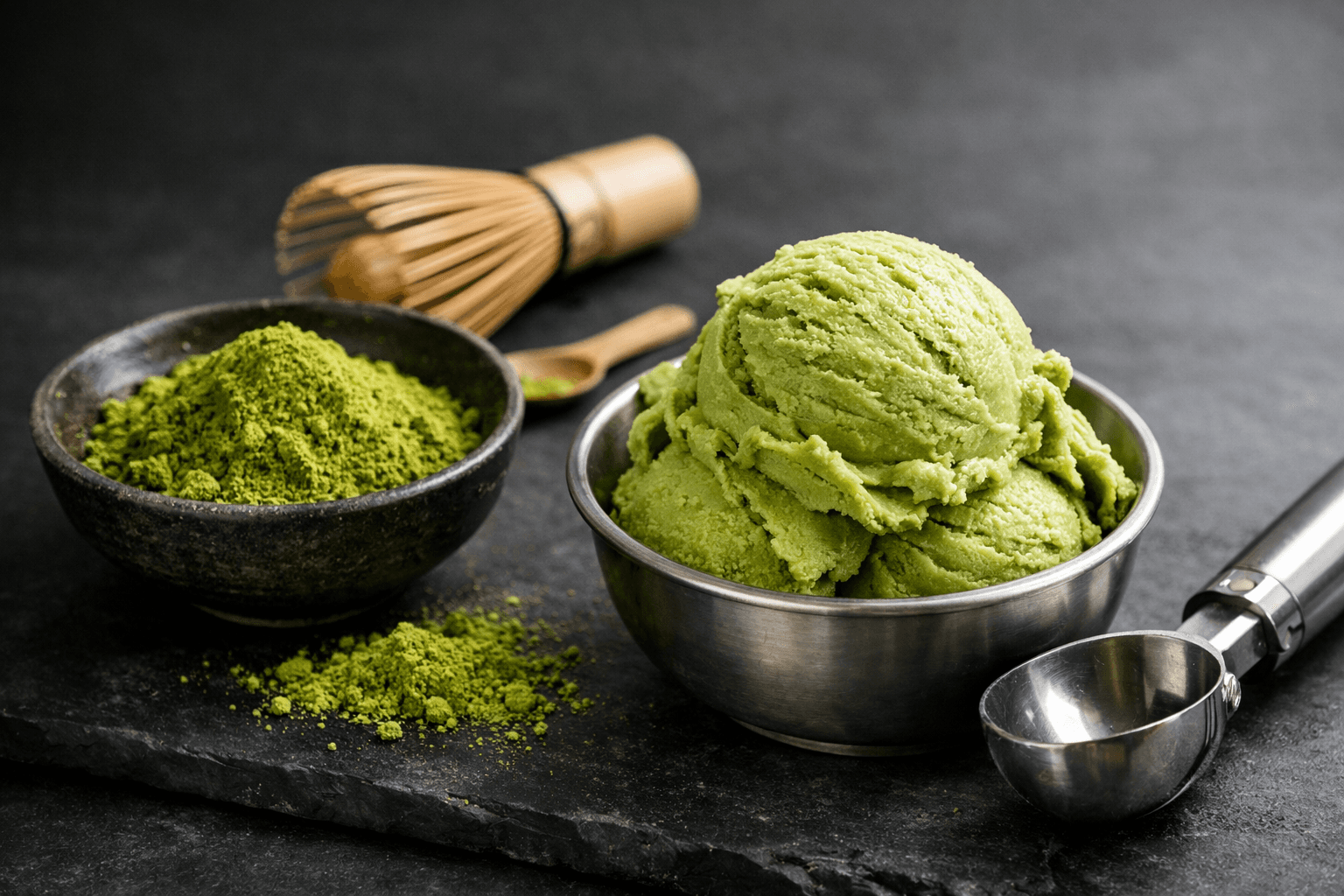
The figure of 29.6% is a signal, not market share
The popularity of matcha in the F&B industry puts ice cream shops up against a fairly practical question: should they add a new flavour now or simply monitor the situation for a little longer? According to the 2024 Vietnam Food and Beverage Business Market Report, as cited by Báo Điện tử Chính phủ, matcha drinks led the way, chosen by 29.6% of businesses. Dishes made with matcha also topped the list of the most popular food and drink trends of the year.
The figure is prominent enough to catch the attention of anyone planning a menu, but its scope needs to be understood correctly. The 29.6% reflects the number of businesses that chose matcha drinks within the published survey. It is not revenue market share, order share or evidence that one in every three customers orders matcha.
Trends show where the market is looking; data from the point of sale shows how far a shop should go. This distinction helps businesses avoid both extremes: overlooking a noteworthy movement or rushing to make an emerging ingredient the focus of the entire menu.
Appeal still has to pass the test of price and quality
The report mentioned above was based on research involving 4,005 restaurants and cafés and 4,453 diners nationwide, while also combining secondary data with in-depth interviews with nearly 100 F&B experts and business leaders. Results from nearly 4,500 diners show that people’s spending has not declined, but they prioritise good-quality choices at affordable prices.
Placing the two findings side by side, it becomes clear that matcha is attracting attention, while the final product still has to pass the test of perceived value. An ingredient that attracts interest does not automatically create a best-selling item. The outcome also depends on the price, consistency of quality between servings, the item’s role within the range and how well it suits the customer group at each point of sale.
So, the useful question is not “should we chase matcha or not?”, but “what role could matcha play in the current menu?”. Changing the question helps the shop focus on its own situation rather than react to the reach of an external trend.
What opportunities does matcha create for an ice cream menu?
The fact that matcha-based dishes topped the 2024 food and drink trend list offers a useful point of reference for the ice cream and dessert sector. Even so, this finding does not in itself prove that matcha gelato is certain to have high demand. It simply provides a reasonable basis for a shop to consider a limited trial.

Three possible roles to consider
On an ice cream menu, matcha can appear as a standalone flavour, an ingredient in a combination item or a seasonal option. Each role requires a different level of investment and a different approach to evaluation.
- Standalone flavour: suitable when a shop wants to test the appeal of matcha flavour directly.
- Ingredient in a combination item: helps evaluate matcha within a broader product structure rather than relying solely on a single standalone flavour.
- Seasonal item: limits the selling period so the response can be observed before assigning the flavour a permanent place in the range.
Whichever option is chosen, it should begin with a specific gap in the menu. A new item needs to fill a missing role, not simply make the flavour list longer.
Distinguishing trial purchases from staying power
Curiosity can generate initial orders, but it does not yet show whether a product can sell consistently. The decision to retain it should be based on results at the point of sale itself: the number of selections, feedback on price, consistency during service and signs of repeat selection over the monitoring period.
This is also a point that calls for caution when reading the 2024 matcha trend. Its leading position shows that the ingredient is attracting attention; it does not replace each shop’s own operational data.
A framework for evaluating a matcha item before expansion
A trend only becomes useful when it is turned into questions that can be observed. The framework below helps owners identify the purpose of testing a new item and what to base their decision on.
| Questions to answer | Signs to monitor | Meaning for the decision |
|---|---|---|
| What role does the matcha item play? | Core item, seasonal item or supplementary item | Determine the level of investment and trial period |
| Are customers willing to choose the item? | Number of orders and share compared with other flavours in the same group | Evaluate its initial appeal at the point of sale |
| Is the price appropriate? | Feedback on price and sales results at each trial price | Compare the trend with demand for genuine value |
| Is the quality consistent? | Differences between batches or service shifts | Assess whether the item is suitable for retention or expansion |
| Do customers choose it again? | Repeat selections during the monitoring period | Distinguish initial curiosity from more lasting demand |
There is no single threshold that suits every business model. What matters is for the shop to define its criteria before starting, then use the same recording method throughout the trial period. If the recipe, selling price and way of presenting the item are all changed at the same time, the results will make it difficult to identify which factor actually made the difference.
How to test without disrupting the range
Rather than launching multiple variants at the same time, a shop can narrow the scope and keep the measurement method consistent. A small test does not eliminate risk, but it helps avoid changing the entire range simply because of one ingredient wave.

- Set the objective: determine whether the new item is intended to refresh the menu, attract trial purchases or find a flavour that can be sold long term.
- Choose an initial format: limit the rollout to avoid too many items splitting sales and making the results difficult to interpret.
- Set the monitoring period: record sales, feedback on price, serving feasibility and consistency between batches.
- Set the conditions for keeping, modifying or stopping it: agree in advance which signs will lead to each decision.
- Expand only after obtaining results: develop additional formats or serving volumes once the test item has met the set objectives.
This approach also helps the shop narrow down the issue. If selection is low, the cause may lie in how the item is presented or where it appears on the menu. If customers try it but rarely choose it again, the recipe, price or product experience needs closer examination. These are hypotheses to test at the point of sale, not default conclusions.
Baby Boss's practical role
Baby Boss is the publisher of this content and operates in the gelato sector. From that position, we view the matcha signal in the F&B industry as an input for product development, not a guarantee that a new gelato flavour will sell well.
From a trend to a clear test
A business considering a matcha item can begin by reviewing the product structure and the fundamental principles in the gelato knowledge. If the issue concerns equipment, processes or how the point of sale is organised, the content on gelato shop set-up consultancy offers a reference direction more closely aligned with operational activities.
The useful role of Baby Boss here is not to encourage shops to create a large number of matcha items. The focus is on identifying what objective the new item serves, how broad the test should be and which criteria should guide the decision to continue.
What to retain after the matcha wave
Matcha topping the list of food and drink trends in 2024 is a signal worth watching for the gelato industry. However, the gap between market attention and a consistently selling product still has to be bridged by actual results at each shop.
What is worth retaining is not “the menu must include matcha”, but “the shop must know what it is testing”. A resilient range does not chase every wave. It selects relevant signals, tests them within a sufficiently clear scope and keeps only the items that create value for both customers and the business.
References
Join Baby Boss
Explore products and Baby Boss services, or call 1900998880.
Shopee · TikTok · Instagram · Threads · YouTube · LinkedIn · Zalo OA · Pinterest
Comments